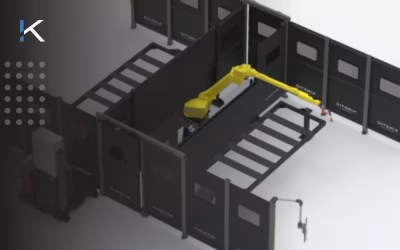
Some parts fit standard robotic welding cells easily. However, parts with changing angles, connectors, or multiple faces usually need additional axes. When that happens, operators spend more time repositioning parts, changeovers slow down, and automation becomes harder to scale.
In high-mix welding, that slowdown compounds quickly. Changeovers take longer, and operators spend more time touching the part. Weld consistency also becomes harder to maintain from one geometry to the next.
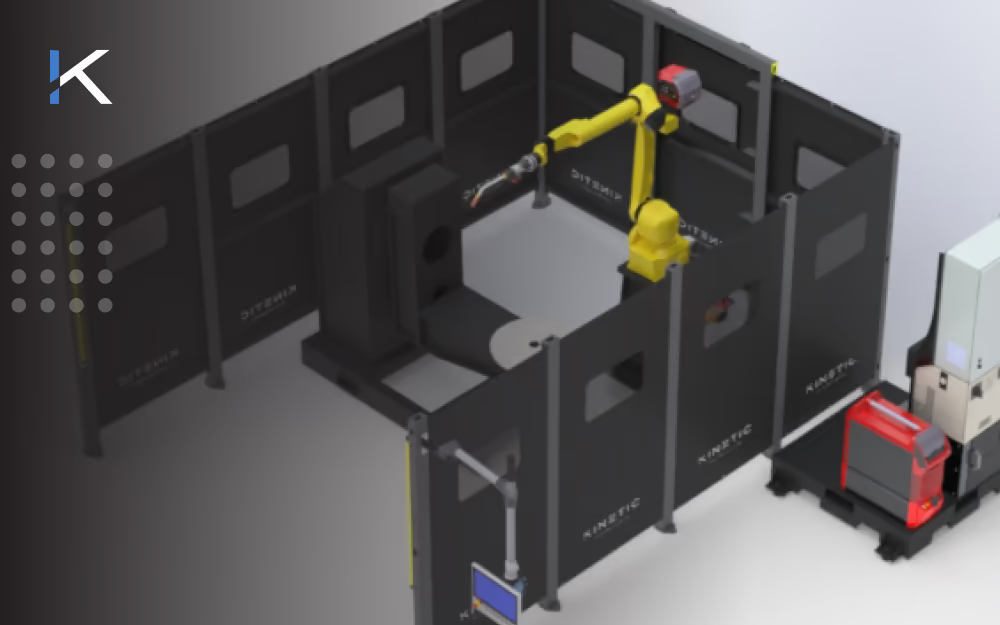
The Skyhook 2-Axis positioner was designed to solve these challenges in a single cell.
Skyhook 2-Axis Positioner Extends Robot Welding Capabilities
The Skyhook 2-Axis positioner improves automation efficiency by combining tilt and rotation into coordinated motion that keeps complex welds in better positions.
The robotic positioner adds two controlled movements:
- A rotary axis for part rotation
- A swing axis that tilts the workpiece for better welding approach
This combines the rotary flexibility of Kinetic’s rotary turntable with the tilt capability of a headstock-tailstock setup. Together, these movements give the robot better control over part presentation. This is especially useful for weld paths that change direction or cross multiple faces.
“It effectively turns a six-axis robot into an eight-axis robot.” – Mark Barglof, owner of Kinetic Technologies
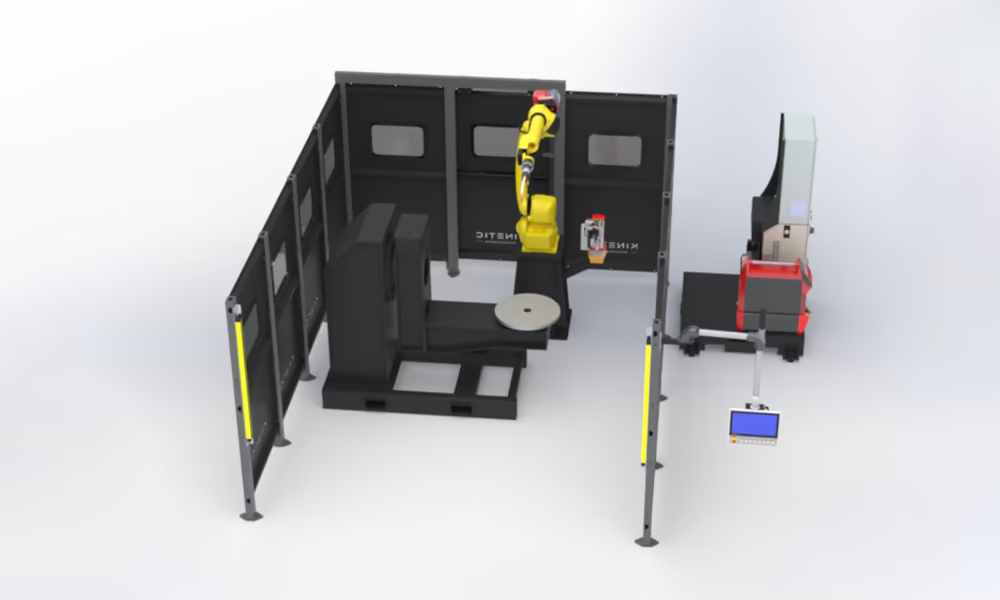
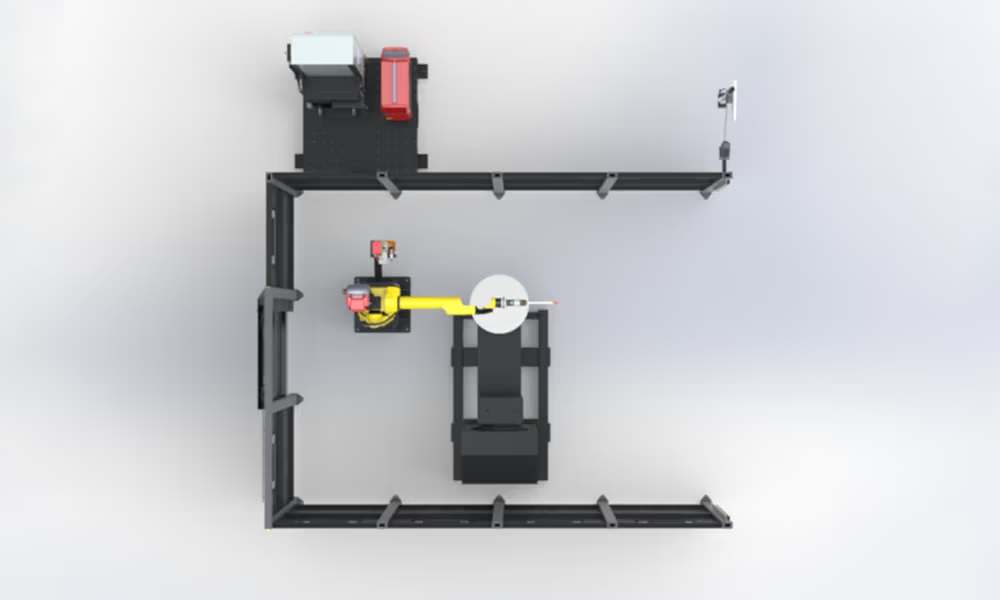
That added coordinated motion is highly beneficial on parts with circular welds, angled connectors, or offset joints. These features often need to stay in a favorable welding position. Instead of stopping to remount the part or change fixture orientation, the cell repositions the workpiece through controlled axis movement. This helps maintain weld access throughout the weld path.
This is especially effective for:
- Pipe connectors
- Angled attachments
- Offset seams
- Faceted weld joints
- Non-circular connection points
By reducing remounting and limiting manual touchpoints, the Skyhook helps maintain flow through complex weld paths. It also gives the engineering team more flexibility. This makes it easier to keep welds in preferred positions without adding fixture complexity.
How Modular Tooling and HMI Workflow Support High-Mix Welding
Modular tooling and a simplified HMI workflow make the Skyhook especially effective for high-mix welding environments. This becomes even more valuable when changeovers happen frequently.
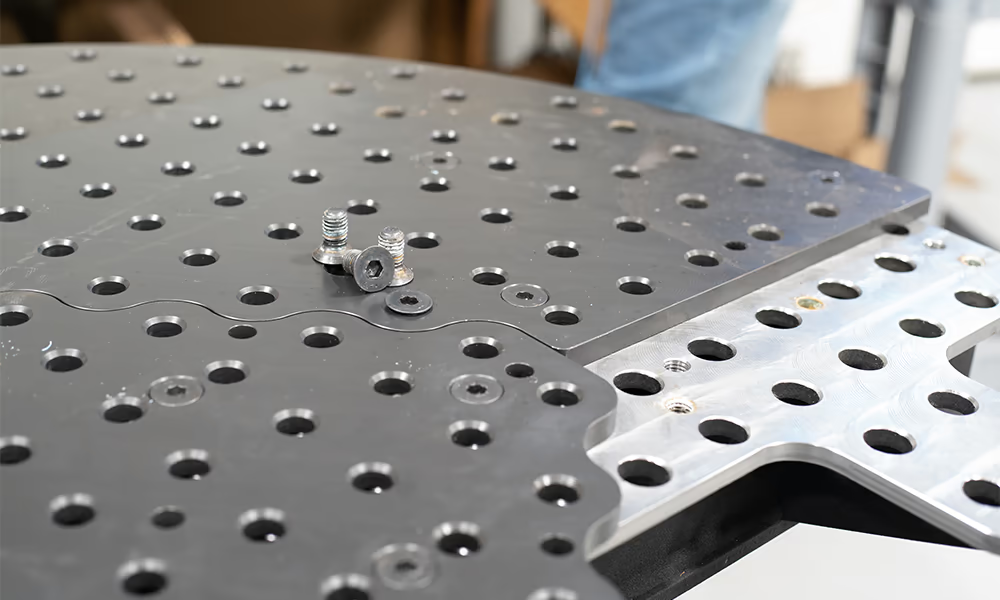
The Skyhook can be configured with Kinetic’s RT1 tabletop, allowing standard Siegmund weld tooling to bolt directly to the surface. This reduces the need for highly specialized fixtures on every new part. For unique workholding needs, Kinetic can also provide bolt patterns or customer-specific tabletop tooling.
That modular tooling approach shortens changeovers and makes the cell easier to adapt across multiple part families.
HMI Workflow Simplifies Operation and Engineering
The HMI follows the same practical logic. Operators can use barcode scanning or work-order inputs to call up the correct program. From there, they run the cell through familiar CNC-style controls like run, stop, hold, and resume.
For engineering, CAD files can be converted directly into FANUC LS files, while the integrated industrial PC supports data access and custom manufacturing applications.
“The operator does not need to be directly involved in the teach pendant.” – Mark Barglof, Owner of Kinetic Technologies
Built for Safe Maintenance and Long-Term Support
Kinetic Technologies approaches the Skyhook as more than a pre-engineered cell. The goal is to help manufacturers keep automation reliable long after launch, with service access and support planned into the system from day one.
Maintenance access begins with interlocked barn-door entry points and a drop-key lockout system. This allows technicians to safely isolate the cell before entering the rear service area. Cables and sensors run through protected tracks and trays away from arc flash, sparks, and weld debris. This reduces long-term wear in the weld environment.
The same practical approach carries into daily operation and support. Safety packages can include:
- Light curtains
- Optional laser scanners
- Modular electronics layouts for easier troubleshooting
Long-Term Support After Installation
Before shipment, Kinetic completes a factory acceptance test (FAT) to validate the full system. After delivery, the team handles onsite installation, startup, and recommissioning to make sure the cell performs correctly in the customer’s production environment.
Support continues after launch through service contracts and Olis remote diagnostics. When a customer requests help, Kinetic gains secure incident-based visibility into the HMI, PLC, sensors, and robot programs.
This lifecycle approach helps manufacturers reduce downtime, simplify maintenance, and keep the Skyhook cell productive as part requirements evolve.
Better Weld Access Starts With the Right Cell Architecture
The Skyhook 2-Axis positioner is a strong fit for high-mix welding environments where tilt and rotation need to work together. This makes it easier to keep complex welds in better positions and automate parts more efficiently.
Kinetic Technologies helps manufacturers evaluate, customize, and launch robotic cells built around real production demands.
If you are planning how to automate complex weld geometry, our team can help you define the right configuration and move toward production-ready automation. Discuss with our robotic welding experts.