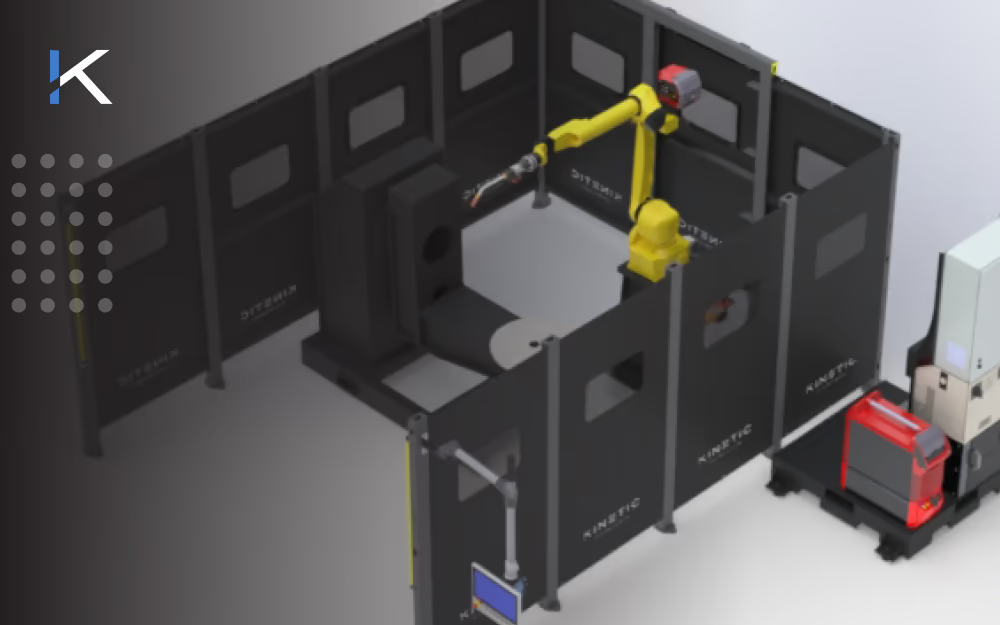
Some parts fit standard robotic welding cells easily. However, parts with changing angles, connectors, or multiple faces usually need additional axes. When that happens, operators spend more time repositioning parts, changeovers slow down, and automation becomes...
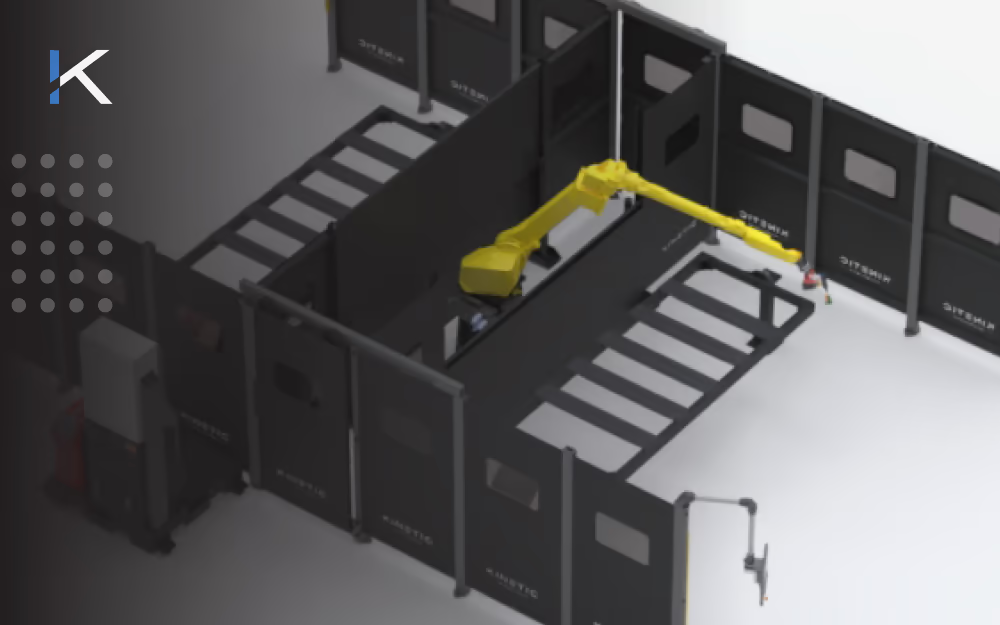
Heavy weldment production often involves long weld cycles. A single trailer frame, structural assembly, or pressure vessel can keep a robot welding for hours. When that weld finishes and the next part is not ready, the robot sits idle and production slows. A dual-cell...
If you are running a welding operation, you feel the pressure every day. Welders are hard to hire, production slows whenever someone is out, and quality issues appear even when your process seems stable. Keeping up takes more effort every month. Automation feels like...
For many manufacturers, the biggest risk in automation isn’t the price of the robot. It’s ending up with equipment that never makes it into daily production. Too often, industrial robots sit idle because no one planned for fixturing, operator training, or...
If you are considering a robotic welding system, knowing where the real costs are and how they affect your bottom line is essential. The true value of a robotic welding system isn’t just in the equipment cost. It lies in understanding what drives welding...
If you are considering robotic welding, return on investment is likely top of mind. Many manufacturers begin by focusing on labor savings, assuming it is the most significant factor. However, that is only part of the equation. At Kinetic Technologies, we see ROI...